This guide explains how the 4Ps Kotler framework—Product, Price, Place, Promotion—can be applied to design consistent, measurable marketing plans. The background section objectively defines the 4ps Kotler concept, clarifies why “mix” thinking matters, and outlines how positioning, channel decisions, and messaging align. It also introduces common supplier and pricing considerations for planning execution.

When organizations struggle to “look consistent” across messaging, storefronts, customer experiences, and internal decision-making, the 4Ps Kotler framework offers a structured remedy. Rather than treating marketing as a collection of disconnected activities—copywriting here, discounting there, a channel launch somewhere else—this framework encourages leaders to treat Product, Price, Place, and Promotion as an interconnected system.
In real business practice, misalignment often shows up as downstream customer friction. Examples include a campaign that promises features the “Product” cannot reliably deliver; pricing that contradicts the intended market position; distribution channels that fail to meet promised availability; or promotions that generate demand spikes the organization cannot fulfill without damaging service quality.
The 4Ps Kotler approach is useful because it explicitly forces teams to connect four strategic realities: what the customer gets (Product), how much they must pay and what it “means” (Price), where they can purchase and receive it (Place), and how the brand communicates value (Promotion). That linkage is what makes the framework valuable for both new market entry and ongoing optimization.
Put simply: a sustainable marketing strategy requires internal coherence. 4Ps gives you a repeatable structure to achieve that coherence—so customers experience one consistent brand truth instead of a patchwork of signals.
The 4Ps Kotler model is a marketing “mix” framework that organizes decisions into four categories. Although marketing has evolved dramatically with e-commerce, social platforms, mobile-first behavior, and AI-assisted targeting, the underlying business problem remains the same: customers must understand what you sell, trust that it will work for them, decide whether the value is worth the cost, and be able to buy it through channels that match their expectations.
In that sense, the 4Ps model is not outdated—it is foundational. It creates a strategic language that different teams can share:
At its core, 4Ps Kotler organizes your marketing decisions into:
Expert insight: The enduring value of 4Ps Kotler is that it creates a shared planning language across functions. Many organizations fail not because they lack ideas, but because they lack alignment. The 4Ps model reduces “handoff gaps” that lead to poor customer experiences, expensive returns, avoidable refunds, and eroded trust.
Additionally, 4Ps is an especially useful framework when you are dealing with:
In the 4Ps Kotler system, Product decisions anchor the rest of the mix. If Product is unclear, unreliable, or mispositioned, price strategy becomes a guessing game and channel strategy becomes a logistical burden rather than a customer advantage.
Before discussing price or channels, teams should clarify what “success” means for the buyer. Are they solving an everyday convenience problem? Seeking a premium experience? Trying to reduce risk? Trying to comply with regulations? The answer should shape the product scope, its support model, and its evidence.
Industry practitioners typically translate product strategy into several operational categories:
Expert insight: Promotion cannot compensate for weak product fundamentals. If you market “premium reliability” but the product fails to meet expectations, the downstream cost doesn’t stay inside marketing. It shows up as returns, churn, service tickets, warranty claims, negative reviews, and reputational damage. In other words, the “cost” of weak Product shows up later and typically at a higher rate.
To improve coherence, teams often use a “value proof” discipline: for every major claim in product messaging, there must be a supporting mechanism. That mechanism might be a test report, a trial experience, a documented warranty policy, an approved performance specification, a demonstration video backed by real usage, or an internal KPI that confirms the service delivery promise.
A frequent 4Ps failure mode is focusing too much on “features” and too little on “outcomes.” Features may matter to engineers or internal teams, but customers typically decide based on what changes for them—what they gain, what they avoid, and what risks they reduce.
Consider how you might describe the same product differently:
In a well-aligned 4Ps plan, every outcome claim should connect to the actual Product design and then echo that alignment in Price and Promotion. For example, if an outcome is “reduces downtime,” the pricing strategy may need to reflect the economic value customers expect (or risk being perceived as overpriced), and the promotion should include proof that supports that claim.
Many organizations sell not one product, but a set of variants (different sizes, performance tiers, configurations, or service bundles). Product decisions then become about structure and clarity.
When variants are unclear, buyers experience the “choice overload” problem, and your Place and Promotion strategy must do extra work to guide selection. But if your Product taxonomy (how you define and present options) is poorly designed, your marketing mix often compensates in expensive and inconsistent ways.
Practical Product structuring tactics include:
These tactics reduce friction at the Place stage (fewer support calls about “what did I buy?”) and improve Promotion efficiency (less mismatch between ad promises and landing page reality).
Price is often treated as a mere number, but in the 4Ps Kotler framework it functions as a strategic signal. It communicates:
Price also affects channel behavior. If resellers or suppliers expect margins to keep their operations viable, your price structure must support partner incentives.
When planning price, consider three dimensions:
Supplier and pricing realities: Even without naming any specific supplier, many organizations coordinate with upstream vendors to understand lead times, minimum order quantities, and price volatility. Those supply-side factors can set practical limits on how frequently discounts can be offered, how quickly inventory can replenish, and how tightly margins must be defended.
Source-based note: For guidance on pricing approaches and value-based thinking, organizations commonly reference established marketing literature and pricing research from reputable academic and professional bodies, rather than ad-hoc benchmarks. (For example, Kotler’s broader body of marketing management work is widely used in university curricula and professional training.)
In a modern environment, customers evaluate price through more than the number displayed. Their perceived price includes:
Therefore, a pricing strategy must coordinate with Product proof and Place feasibility. If delivery is unreliable, a premium “fast” promise can become a pricing credibility problem—because customers feel they’re paying for something they don’t receive.
Discounting is frequently necessary—competitors do it, customers expect seasonal offers, and acquisition funnels often benefit from limited-time incentives. But discounting can create two major forms of misalignment in the 4Ps system:
To prevent those outcomes, organizations can adopt rules that tie discounting directly to Product readiness and Place capacity:
When discount rules are integrated into Promotion and Place planning, customers experience offers as credible and consistent rather than chaotic or unreliable.
Another advanced pricing alignment method is to treat bundles and packages as part of Product and Price strategy simultaneously. A bundle is not merely “two products together.” It is a decision system that guides customer value perception.
Bundle decisions can help you:
However, if your Promotion encourages customers to buy a bundle but your Place cannot fulfill the bundled components quickly or your Product doesn’t deliver the promised scope, then discounting becomes a liability rather than a tool.
In 4Ps Kotler terms, Place concerns where and how the product is purchased and delivered. Place is often framed as a logistics topic, but it is equally a customer experience topic.
If customers discover you in one place but expect purchase in another, confusion arises. If you promote “fast delivery” but your fulfillment is slow in certain regions, the customer journey breaks. If you sell via partners but provide inconsistent support, the customer blames your brand rather than the channel partner.
Effective Place strategy typically maps to:
Localization angle (nearby phrasing): Since location-specific instructions in your prompt were not concretely provided, this article uses a general “nearby” concept when discussing regional availability. The core assumption is that buyers often prefer lower friction options such as easier pickup, faster delivery, and customer support that reflects local expectations.
In many categories, the Place experience is where trust becomes tangible. A customer might spend months considering a purchase, but the final evaluation happens when they:
If any of those steps fail, Promotion’s promises become questionable.
Therefore, Place planning should include operational “guarantee readiness.” If you promise delivery by a date, your fulfillment system should be able to meet that promise often enough to sustain credibility. If you cannot, adjust the marketing promise or create a tiered delivery option (for example, standard delivery vs expedited delivery) so customers see realistic options.
Place decisions can range from fully direct models to hybrid channel ecosystems. Each channel introduces different cost structures, different margin requirements, and different customer expectations.
Common channel models include:
In a coherent 4Ps plan, you would align:
A classic misalignment is running promotions that create demand peaks without operational readiness. This is not only a fulfillment issue—it is a trust issue.
Customers interpret availability problems as brand incompetence. Even if you apologize, the reputational harm can linger because customers compare you with competitors who deliver reliably.
Place-ready planning often requires:
When Place planning is robust, promotions can perform predictably because conversion results align with fulfillment capability.
Promotion in the 4Ps Kotler model covers how value is communicated. Strong Promotion strategy does not simply “buy attention.” It builds credibility across the buyer journey and keeps promises consistent with Product, Price, and Place.
A rigorous approach to Promotion aligns with four internal constraints:
Expert insight: Many organizations measure Promotion performance only by click-through rates. While clicks matter, the more revealing metrics are conversion rate, customer acquisition cost relative to margin, return/refund patterns, and repeat purchase signals. Those outcomes reveal whether the 4Ps mix is internally consistent.
Promotion becomes stronger when it is structured rather than improvised. A message architecture can be mapped to funnel stages. For example:
When content is aligned this way, Promotion does not merely attract; it educates and reduces friction. That reduces the likelihood of low-fit customers and lowers return rates—improving overall profitability and brand trust.
To understand whether your 4Ps mix is working as a system, you need metrics that correspond to each element:
When these metrics are tracked together, teams can see whether problems originate in Product (high returns), Price (low conversion or discount dependency), Place (late shipments), or Promotion (high clicks but low conversion due to mismatched expectations).
Below is a supplement to the framework. It is designed to help you operationalize 4Ps Kotler decisions using clear conditions and requirements, while also considering typical supplier and pricing planning needs.
At a practical level, a “4Ps plan” is less about making one-time decisions and more about establishing decision logic. You create rules that guide future updates: when you launch a new product, adjust a price tier, change distribution channels, or run promotions.
To do this well, you can use a planning table to ensure each 4Ps element is defined with the right questions and connected constraints.
| Component | What to Define | Key Conditions/Requirements | Common Pitfalls to Avoid |
|---|---|---|---|
| Product | Core value, differentiators, service level, warranty/support, packaging or onboarding | Proof points exist; operational capacity supports promised service; product supports the promised user outcome | Promoting benefits that are not reliably delivered; vague feature claims without evidence |
| Price | List price, discount rules, bundles, payment terms, margin boundaries | Pricing can be sustained across channel costs; discounting does not erode unit economics; supplier constraints are understood | Changing price frequently without rationale; offering discounts that cause margin collapse |
| Place | Sales channels, fulfillment method, inventory strategy, service coverage | Availability matches promotion; lead times are feasible; partner incentives align with desired positioning | Running demand campaigns without inventory/fulfillment readiness; selecting channels that don’t fit buyer behavior |
| Promotion | Message architecture, channel mix, content plan, lead conversion assets | Messaging matches product reality; offers reflect pricing logic; tracking supports optimization and attribution | Over-optimizing for clicks; inconsistent messaging across channels; unclear call-to-action |
Frameworks help you plan, but execution determines outcomes. A practical approach is to treat each 4Ps component as a “workstream” with deliverables and feedback loops.
Start by writing a customer outcome statement. It should answer: “When a customer purchases this, what changes for them?” Then build proof mechanisms:
Without this, Promotion can become overly confident and Price can become detached from value perception.
Next, ensure Product and service levels are designed around that outcome. If the outcome requires installation, onboarding, or specific support response times, those must be included in Product scope or addressed via explicit add-ons.
This step prevents a common failure where marketing promises a “premium experience,” but the operational delivery is inconsistent or incomplete.
Now determine price architecture based on value logic and cost boundaries. You should incorporate:
This step connects Price to Place and Product: if cost-to-serve differs by channel or geography, your price tiers may need to differ—or your offers must specify shipping/service expectations accurately.
Then decide where the customer will buy and receive the product. Map channel fit to buyer behavior and then validate operational readiness:
This reduces mismatches like “promoted fast delivery” followed by late shipments and refunds.
Finally, implement Promotion with consistent messaging and credible offers. Promotion should:
Additionally, set up tracking that links outcomes back to the 4Ps decisions. The goal is to create an evidence loop: if customers return frequently, you identify which 4Ps element failed and adjust accordingly.
To keep decision-making grounded, marketing professionals often rely on peer-reviewed and institution-backed materials rather than anecdotal benchmarks. For example:
Note: This article intentionally avoids unverified performance figures. Where metrics are discussed, the emphasis is on what to measure and why consistency matters in the 4Ps Kotler mix, rather than on risky claims about guaranteed results.
Even though the 4Ps framework is simple, misalignment can occur in subtle ways. The following scenarios illustrate typical problems and the corrective actions that connect across Product, Price, Place, and Promotion.
Problem: A brand promotes itself as “premium,” charges a premium Price, and runs ads emphasizing performance. Yet customer reviews show frequent quality issues.
What’s misaligned: Product reliability does not support Promotion claims. Price signals premium quality, so failure feels like a betrayal.
4Ps fix: tighten quality assurance, update product specs, strengthen warranty/service terms, and adjust Promotion to emphasize realistic outcomes with proof. Price should reflect the actual reliability level or be temporarily repositioned until improvements are stable.
Problem: A team runs aggressive discounts to boost conversion, but the supply chain cannot restock quickly. Place delivery becomes inconsistent.
What’s misaligned: Promotion creates demand peaks, Price discounts reduce revenue per unit, and Place cannot fulfill reliably.
4Ps fix: set discount eligibility tied to inventory thresholds; limit promotional frequency; create a “backorder with clear ETAs” policy; and adjust Promotion so it doesn’t promise immediate availability unless stock is confirmed.
Problem: A company sells direct-to-consumer, then expands into retail. Ads and landing pages promise a certain onboarding experience, but retail customers get a different setup process.
What’s misaligned: Place changes the customer experience; Promotion fails to reflect that change; Product packaging or service steps may differ by channel.
4Ps fix: update channel-specific Product onboarding guides, align retailer materials with the same proof points, and revise Promotion creatives to accurately describe what customers will receive in-store.
Problem: A brand runs frequent “limited-time offers,” but customers later see the same offer again with different terms, or discounts apply inconsistently.
What’s misaligned: Price signaling and Promotion credibility are inconsistent, damaging perceived fairness.
4Ps fix: define clear promo rules (expiration logic, eligibility criteria, minimum quantity requirements), update Promotion copy, and ensure internal and channel-specific pricing rules match what customers see.
The 4Ps Kotler framework is a marketing “mix” model that organizes strategic decisions into Product, Price, Place, and Promotion. It helps teams align what they offer, what it costs, where it’s sold, and how it’s communicated—so each element supports the others.
For services, “Product” becomes the service design: scope, delivery steps, quality standards, and customer support. “Place” becomes service delivery and access points (appointments, online scheduling, coverage area). “Promotion” and “Price” still apply through packages, payment terms, and credible communication of outcomes.
Typically, you should define Product value first and ensure delivery capability. Then Price should reflect value perception and cost boundaries. Promotion should communicate exactly what the customer receives at that price. Inconsistent sequencing often leads to lower retention and higher refund rates.
Supplier constraints affect lead times, availability, and unit cost—directly influencing Price margins and Place readiness (fulfillment capability). If supply cannot support demand spikes created by Promotion, customer experience suffers. Therefore, supplier realities should inform discount schedules and inventory or capacity planning.
Look beyond top-funnel metrics. Track conversion rate, customer acquisition cost relative to margin, on-time delivery/service metrics, refund/return rates, churn or repeat purchase rates, and customer satisfaction indicators. Those metrics reveal whether Product, Price, Place, and Promotion work together coherently.
Yes, because the core issue remains alignment. Digital channels change how you reach customers, but Product truth, Price logic, availability through Place, and credible Promotion messages still determine outcomes. Many teams use the 4Ps as a planning backbone while implementing tactics through modern platforms.
As a final expert-oriented sanity check, evaluate your strategy under the 4Ps Kotler lens. This checklist is meant to help you detect inconsistencies before they become expensive problems:
When these elements reinforce each other, marketing becomes less about “running campaigns” and more about executing a coherent commercial system—one that supports sustainable growth rather than short-lived spikes. That is the practical value of 4Ps Kotler: it transforms marketing from a sequence of tactics into a coordinated strategy.
The 4Ps Kotler framework remains a practical tool for structuring marketing decisions across Product, Price, Place, and Promotion. When teams treat the marketing mix as a system—taking into account pricing boundaries, supplier constraints, distribution feasibility, and message credibility—they reduce inconsistency and improve customer outcomes. Use the framework to plan deliberately, measure responsibly, and refine continuously based on evidence rather than assumptions.
Striking the Perfect Balance: Navigating Premiums and Out-of-Pocket Expenses in Senior Insurance Plans

Explore the Tranquil Bliss of Idyllic Rural Retreats

How to Make Lasting Memories at Disneyland Attractions

4rkojvsx Technology: Industry Insights and Buying Guide

Affordable Phones and Plans for Seniors

Affordable Full Mouth Dental Implants Near You

Unlock the Top Kept Secrets to Finding Your Ideal Dentist for Flawless Dental Implant Results!

Discovering Springdale Estates

Unveiling RS Sul Telecom Services

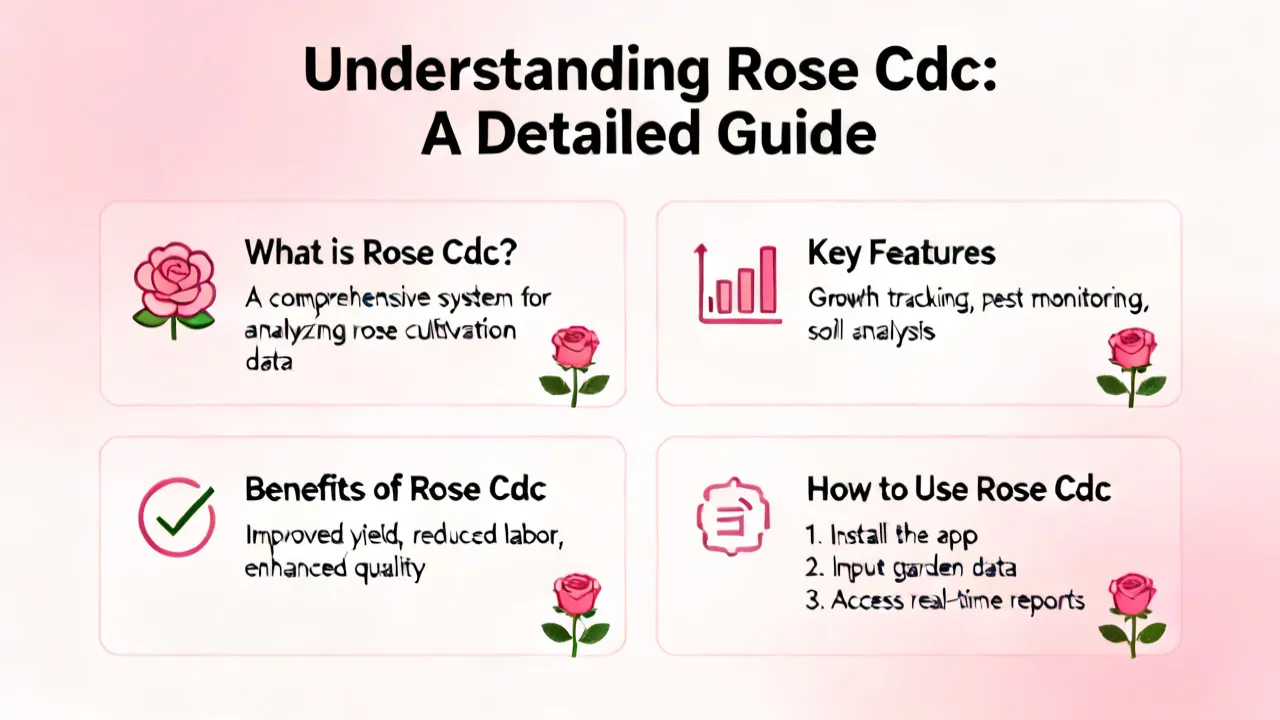
Understanding Rose Cdc: A Comprehensive Guide
This article provides an in-depth exploration of Rose Cdc, a term rapidly gaining attention in specific industries. Our discussion delves into the significance and application of Rose Cdc, its potential impact on various sectors, and expert insights into its future developments. This comprehensive analysis is designed to inform readers about the multifaceted aspects of Rose Cdc, its current applications, and potential advancements.

Understanding Compliance and AML Strategies
This article delves into the intricate realm of Compliance and Anti-Money Laundering (AML) strategies, highlighting their significance in the corporate world. Compliance AML refers to the organizational adherence to legal standards and regulations to deter financial crimes, ensuring transparent and ethical financial practices. This comprehensive guide examines these strategies' complexities and their pivotal role in safeguarding economic integrity.

Mastering Inbound B2B Strategies
The foundation of successful B2B strategies often lies in the effective implementation of inbound marketing techniques. In today's globally connected business environment, inbound B2B strategies have become critical for companies seeking to engage target audiences, optimize lead generation, and establish long-lasting partnerships. Understanding these strategies is essential for companies aiming to thrive in competitive markets.

Exploring B2B MBA Opportunities
Dive into the dynamic world of B2B MBA programs, designed for professionals seeking to enhance their strategic and management skills in a business-to-business context. This comprehensive guide discusses the significance of B2B MBAs in today's market, highlighting how these programs equip leaders with the expertise to navigate complex B2B relationships and drive business success.

Understanding Whitewater Regenerative Blowers
Whitewater Regenerative Blowers are essential in various industrial applications for their efficiency in moving air and gases. These blowers are known for their durability and ability to operate continuously, making them a preferred choice for industries ranging from wastewater treatment to aquaculture. This article explores their features, benefits, and applications, offering readers a comprehensive understanding of their importance in modern industry.

Mastering Employee Retention Strategies
Employee retention has become a critical aspect of organizational success, particularly in the dynamic landscape of 2020. As businesses strive to maintain a stable and productive workforce, understanding effective retention strategies is essential. This article delves into key methods for enhancing employee satisfaction and retention, offering a comprehensive guide for HR professionals and business leaders alike.
