This guide explains how StandUp Wireless Phones fit into the U.S. Lifeline communications program, including eligibility, application steps, service limits, device choices, and possible package charges. It also compares StandUp Wireless with SafeLink Wireless, Assurance Wireless, Access Wireless, and True Wireless. Provider availability, plan features, and requirements vary by state, household circumstances, and program rules, so applicants should confirm current details directly with the official provider.
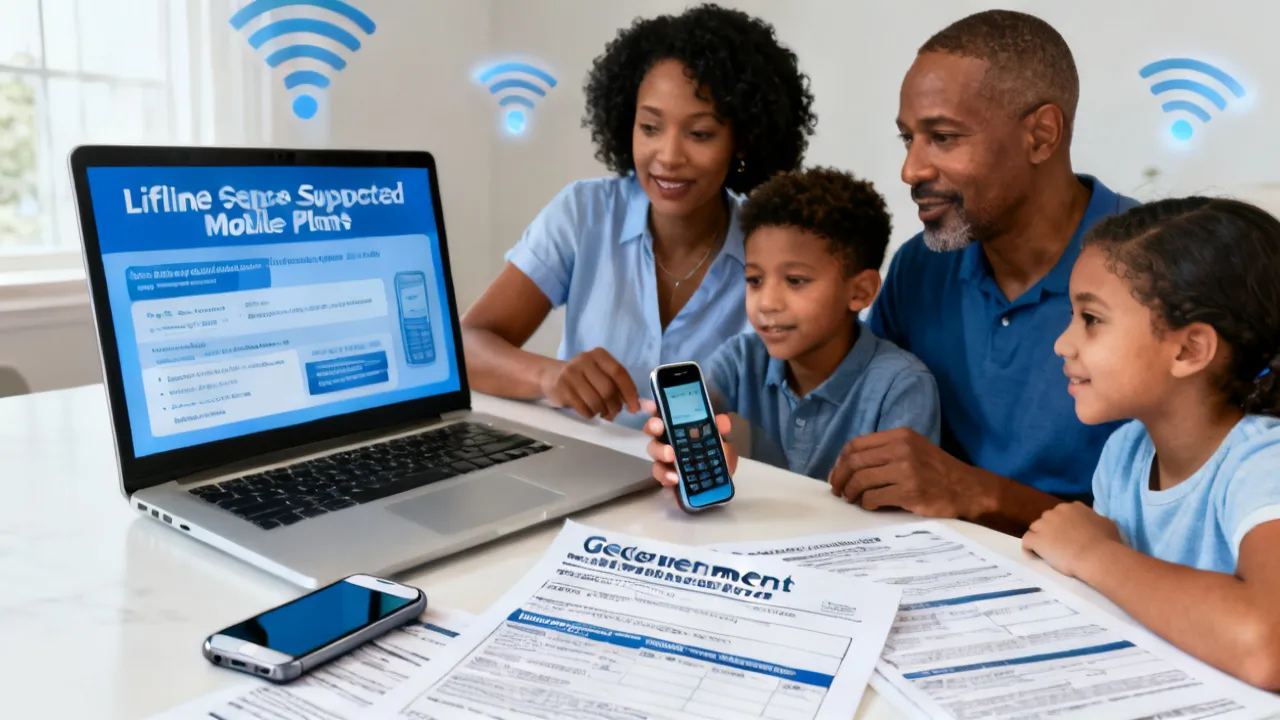
StandUp Wireless Phones are mobile devices and service options associated with StandUp Wireless, a participating provider in the federal Lifeline program in eligible areas. Lifeline is a government benefit intended to help qualifying low-income households maintain access to voice and broadband communications. Depending on location and program availability, an eligible applicant may receive a provider-supported handset, use an approved personal device, and receive a monthly voice, text, or data allowance.
The very important point is that an applicant does not automatically receive a device simply by submitting a form. Eligibility must normally be established through income information or participation in a qualifying assistance program. The provider may also need to confirm the applicant’s identity, address, household status, and service area. A complete application can still require additional review if documents are unclear, information does not match, or the household already has another Lifeline enrollment.
StandUp Wireless is one of several companies that have offered Lifeline-related mobile service. Other names commonly associated with this category include SafeLink Wireless, Assurance Wireless, Access Wireless, and True Wireless. Their plans are not identical. Network coverage, data allotments, handset inventories, activation procedures, customer support, and optional charges can differ considerably by state and by the date of application.
From an industry perspective, the right way to compare StandUp Wireless Phones is not to focus only on the handset. The more meaningful questions are whether the plan works at the applicant’s address, whether the monthly data allowance suits the household’s needs, whether the phone is compatible with local networks, and what happens after the initial device or plan period. A basic handset can be useful, but dependable coverage and transparent account rules often matter more over time.
For some households, the phone is the primary connection to employers, schools, medical offices, government agencies, and family members. That makes reliability especially important. A device may appear attractive in an advertisement, but its practical value depends on battery life, call quality, software support, charging options, and the ability to maintain service without unexpected fees. Consumers should therefore evaluate the complete communications package rather than treating a free or discounted phone as the only benefit.
Lifeline is administered through federal and state processes, while participating wireless companies deliver the retail service. This distinction is important. The government program establishes broad eligibility and compliance requirements, but a provider determines the specific plan, device selection, network arrangement, enrollment workflow, and optional services it makes available in a particular area.
In practical terms, an applicant may begin by checking eligibility through the official Lifeline process or by following the enrollment path presented by a participating carrier. The carrier may request permission to verify eligibility electronically. If electronic verification is unsuccessful, the applicant may need to upload or submit supporting documents.
Documents can include proof of participation in Medicaid, SNAP, SSI, or another qualifying program. An applicant qualifying through income may need documents showing current household income. Depending on the verification process, acceptable records may include benefit statements, pay records, tax documents, or official program correspondence. The provider’s instructions should be followed carefully because a document that is generally useful may not satisfy a particular verification request.
Applicants should also understand the household rule. Lifeline is designed around the economic unit sharing income and expenses at one address, not simply the number of adults who live there. If more than one person in the same household already receives a Lifeline benefit, the household may need to explain the situation or select a single participating provider. Duplicate enrollment can lead to suspension, cancellation, or a request to choose which account remains active.
The National Verifier may be involved in determining eligibility. It is a centralized system intended to check whether an applicant meets program standards and whether the household is already receiving a benefit. A provider may still help with the application, but the provider cannot freely waive federal eligibility rules. If an applicant receives a message that additional information is needed, responding promptly is usually preferable to submitting an entirely new application.
There is also an important difference between approval and activation. Approval means that the applicant has been found eligible for the benefit or has passed a particular stage of verification. Activation involves connecting a specific phone or SIM card to the provider’s network. These steps can occur on different dates, and a person may need to complete a final activation instruction before calls, texts, or data work.
StandUp Wireless has promoted a combination of provider-supplied smartphones and bring-your-own-device arrangements, subject to availability and eligibility. A supplied handset may be a basic Android smartphone or another entry-level device selected from the provider’s current inventory. Because inventories change, the exact model should not be assumed before approval.
A bring-your-own-device option can be practical for applicants who already own an unlocked, compatible phone. Before choosing this path, the applicant should verify that the device is unlocked, supports the provider’s network technology, has a compatible SIM or eSIM configuration, and is not blocked because of loss, theft, unpaid financing, or a previous account issue. A phone that works with one carrier may not work with another, even when both advertise broad national coverage.
Service allowances may include voice minutes, text messaging, and mobile data. The supplied reference information describes unlimited talk and text in some StandUp Wireless offerings, with data amounts determined by plan and state. “Unlimited” does not necessarily mean that every use case receives the same speed or priority. Plans can include high-speed data thresholds, network-management terms, video-resolution limits, hotspot restrictions, or account-renewal conditions.
Optional charges may apply when an applicant selects a premium handset, purchases additional data, adds international calling, replaces a damaged or lost device, or chooses a service enhancement. These costs are separate from the Lifeline benefit itself. A careful applicant should ask whether the amount is one-time or recurring, whether taxes or shipping apply, and whether an optional purchase affects eligibility or account status.
Industry analysis favors a total-cost approach. A lower initial device cost may not be the least expensive option if the phone has limited storage, weak battery performance, or poor compatibility with required applications. Conversely, a premium upgrade may be unnecessary for a user who mainly needs voice calls, text messages, appointment reminders, and occasional internet access. The best selection is the one that matches actual communication needs without creating an avoidable monthly obligation.
Applicants should also distinguish between a device payment and a service payment. A handset upgrade may be a one-time charge, while an expanded data package may renew monthly. Some fees may appear during checkout, activation, replacement, or shipping rather than in the headline description. Reading the order summary before submitting payment can prevent confusion later.
The following comparison reorganizes the supplied provider information into a consumer-focused overview. Features, availability, and charges may vary by state, plan, enrollment date, and regulatory changes. The table does not replace the provider’s current terms.
| Provider and official program website | Services commonly described in the supplied information | Possible additional package costs |
|---|---|---|
| SafeLink Wireless — official website listed below | Provider-supplied smartphone or bring-your-own-device option; voice, text, and data allowances that vary by plan and state. | Premium handset upgrades and additional data may involve separate charges. |
| Assurance Wireless — official website listed below | Android smartphone options, talk and text allowances, and a plan-specific data allocation. | Extra high-speed data and international calling may be offered as optional paid services. |
| StandUp Wireless — official website listed below | Smartphone or bring-your-own-device options, voice and text service, and data plans for eligible customers in participating areas. | Premium devices and extra data may be available for an additional fee. |
| Access Wireless — official website listed below | Voice, text, and limited high-speed data associated with Lifeline and, during the relevant period, ACP-related offerings. | Data boosts and handset upgrades may carry separate charges. |
| True Wireless — official website listed below | Government-supported handset options, voice service, and data plans for qualifying applicants. | Better devices or additional data packages may involve additional payment. |
Source: The provider information summarized above is based on the official websites listed below and the supplied program reference material. Applicants should confirm current availability, pricing, and eligibility directly with each provider.
source: www.safelinkwireless.com
source: www.assurancewireless.com
source: standupwireless.com
source: www.accesswireless.com
source: www.gotruewireless.com
When comparing providers, consumers should ask the same questions of each company. Is the service available at the residential address? What network does the phone use? How much high-speed data is included? Is mobile hotspot permitted? Does the plan require periodic use to remain active? Is the phone free, discounted, or available only with a fee? What are the replacement and transfer rules? A consistent checklist makes comparisons more meaningful than relying on different advertising language.
Eligibility usually follows one of two routes: income qualification or participation in a qualifying government assistance program. The exact standard is controlled by the program rules in effect when an application is reviewed and by the applicant’s state or Tribal area.
The supplied reference material identifies a Lifeline income threshold of 135% of the federal poverty guidelines. Household size matters. A one-person household and a household with several members are evaluated against different income limits. Applicants should use the current federal guideline or the eligibility checker provided by the official program rather than rely on an old figure copied from a third-party article.
Income may include wages, self-employment earnings, unemployment compensation, retirement income, or other sources recognized under the applicable rules. The verification system may request information for the applicant and, when relevant, other members of the qualifying household. If income has recently changed, the applicant should provide current and accurate information instead of relying on a previous year’s circumstances.
Applicants should not estimate eligibility solely by looking at take-home pay. Program definitions may use specific forms of income and may treat deductions differently from a personal household budget. A person who is unsure should use the official eligibility tool or contact the program administrator rather than intentionally entering an inaccurate figure.
Participation in certain assistance programs may provide another route to eligibility. Common examples include:
Program participation normally must belong to the applicant or, under the household rules, to an appropriate qualifying member of the household. A benefit card alone may not contain enough information for verification. An official approval letter, current statement, or agency document may be more useful if the provider requests proof.
People receiving several benefits should not assume that every program creates a separate phone benefit. Qualifying through one recognized program is generally enough for the eligibility route; enrolling in multiple carriers because a household participates in multiple assistance programs can create a duplicate-benefit issue.
Residents of qualifying Tribal lands may have access to enhanced support or additional qualifying programs. The phrase “Tribal lands” has a specific regulatory meaning, so an applicant should not assume that any rural location or reservation-adjacent address automatically qualifies. Address verification and program-specific rules determine whether enhanced support applies.
Tribal applicants may be asked for documentation showing residence or participation in a qualifying Tribal program. Because rules can differ from standard Lifeline enrollment, the applicant should review the official instructions rather than submit informal proof that may delay processing.
One of the very important safeguards is the one-benefit-per-household principle. A household generally cannot receive multiple Lifeline benefits simply because several people want separate phones. People who share an address but maintain separate economic households may have a process for explaining that circumstance, but they should not create duplicate accounts without guidance.
Applicants should also disclose existing service accurately. Switching providers may require the current benefit to be transferred rather than creating a second enrollment. Failing to complete a transfer can cause the application to stall or the account to be de-enrolled during compliance review.
A household may still own multiple ordinary commercial wireless lines and remain eligible for Lifeline, but only one line can generally receive the Lifeline benefit for that household. The benefit is not intended to provide a subsidized line for every family member. If multiple people need mobile service, the household should understand which line receives the supported plan and how other lines will be paid for.
The following sequence offers a practical application framework. The exact screens, documents, and verification steps may change, but the underlying process is generally similar.
Applicants should use an address where they can reliably receive mail if a physical SIM card or handset is being shipped. A temporary location, shelter, family address, or post-office arrangement may require special instructions. The provider should be contacted before submission if the applicant’s mailing address differs from the residential address used for eligibility.
It is also wise to check the application status through the official account portal instead of relying only on text messages. Legitimate providers may send status notices, but consumers should not disclose passwords or verification codes to an unsolicited caller. If a caller claims that payment is required to “unlock” a government phone, the applicant should independently contact the provider.
Applicants should provide only the documents requested by the official process and should protect sensitive information. Typical records may include a government-issued identification document, proof of address, a current benefits notice, an agency letter, a pay statement, or an income-tax document. The acceptable list may vary according to the eligibility route and the verification problem being resolved.
A common source of delay is submitting a document that proves a person once received assistance but does not show current participation. Another is submitting an image that is blurry, incomplete, or missing the applicant’s name. Applicants using a smartphone to photograph paperwork should place the document on a flat surface, use sufficient light, and check that every page is legible before uploading it.
Privacy also deserves attention. Official providers should explain why information is requested and how it is used. Applicants should be cautious of unsolicited messages demanding payment, passwords, or complete financial-account details. When in doubt, close the message and navigate to the provider’s official website independently rather than clicking an unfamiliar link.
Documents should generally be current and consistent. If the benefit letter uses a different surname because of a recent marriage, divorce, or legal name change, the applicant may need to provide an additional document explaining the difference. If the address has changed recently, an official lease, utility document, government letter, or other accepted record may help establish the current residence.
Plan labels can be confusing because a single package may include several separate allowances. Voice service concerns calling minutes or an unlimited-use provision. Text service covers standard SMS or related messaging. Data supports web browsing, maps, email, application updates, video, and many smartphone functions. A plan may describe these features together while applying different limits to each.
Data is usually the most variable element. A user who primarily checks appointment information and sends messages may need far less data than someone who attends video meetings or watches streamed content. Mobile video can consume a substantial portion of a monthly allowance, while automatic photo backup and application updates can also use data without obvious user action.
Applicants should inspect whether mobile hotspot use is allowed, whether unused data carries forward, and whether speed changes after a threshold. If additional data is available for purchase, the price and expiration period should be reviewed before ordering. A data add-on that expires quickly may not be good value for a household with occasional rather than continuous usage.
Network coverage is another separate issue. A provider may use a partner network, and the coverage shown on a map is not a promise of identical indoor performance at every address. Buildings, terrain, congestion, local infrastructure, and handset radio bands can affect service. Consumers should compare coverage where they actually spend time, not only where the provider’s headquarters is located.
Some smartphone functions use data even when the user is not actively browsing. Notifications, operating-system updates, cloud synchronization, location services, and social-media refreshes can consume an allowance. Users with limited data may conserve it by connecting to trusted Wi-Fi, disabling automatic updates over cellular networks, downloading maps in advance, and limiting high-definition video.
A provider-supplied smartphone can simplify enrollment because the carrier has selected the device for its service environment. However, the model may have limited storage or an older operating system. Before accepting an upgrade, consider whether the device is needed for accessibility tools, banking applications, telehealth, navigation, or authentication services.
Bring-your-own-device enrollment can preserve familiar contacts and settings, but compatibility requires more than a phone turning on. The device should be unlocked, supported by the relevant network, and able to use the required SIM or eSIM. Applicants should back up contacts, photographs, and important messages before changing service. If the existing device is financed, stolen, or associated with an unpaid account, activation may be blocked.
Security should be part of the decision. Choose a phone that still receives operating-system and security updates. Use a screen lock, enable account recovery methods, and install applications through trusted marketplaces. A low-cost handset with outdated software may create more risk than a slightly newer model, particularly for users who manage health, employment, or financial information on the device.
Accessibility features are also worth considering. A person with vision, hearing, dexterity, or cognitive needs may benefit from a larger display, stronger speaker, hearing-aid compatibility, physical volume controls, voice commands, or simplified menus. A phone that technically works on the network may still be unsuitable if the user cannot comfortably operate it.
Battery condition matters when using a previously owned device. An older battery may drain rapidly when connected to mobile data or when used in an area with a weak signal. Applicants should check the battery-health information when available and keep a compatible charger. A low-cost protective case and screen protector can reduce the likelihood of needing a replacement device.
SafeLink Wireless has offered provider-supplied smartphone and bring-your-own-device pathways in eligible areas. The supplied information describes voice, text, and data service that can vary by state and plan. Applicants considering SafeLink should verify whether the selected device is part of the standard package or an upgrade and whether additional data is billed separately.
Assurance Wireless has been associated with Android smartphone options, talk and text service, and plan-specific data allowances. The supplied reference material identifies optional high-speed data and international calling as possible paid additions. Users who need international communication should check destinations, rates, exclusions, and whether the feature renews automatically.
StandUp Wireless is the central focus of this guide. Its supplied service description includes smartphone and bring-your-own-device options, voice and text service, and data plans. Premium device upgrades and additional data may involve charges. Applicants should ask for a written summary of the plan available at their address before selecting an upgrade.
Access Wireless has offered voice, text, and limited high-speed data connected with Lifeline and, during the period when ACP support was available, ACP-related offerings. Because the ACP ended in 2024 after funding was exhausted, historical references to ACP should not be treated as proof that the benefit is currently open. Applicants should verify the current program status and provider terms.
True Wireless has described government-supported handset, voice, and data options for qualifying customers. The supplied information identifies Medicaid and SNAP participation, as well as income qualification, as possible eligibility routes. Applicants should confirm the service territory and available device models before submitting documents.
The comparison should not be interpreted as a ranking. A provider that works well in one city may perform poorly in another because of network design, terrain, building materials, and congestion. Customer support hours and communication methods also matter. An applicant who does not have reliable internet access may prefer a provider with telephone assistance, retail support, or a clear mailed-document process.
Incomplete documentation is only one reason an application may require review. A mismatch between the applicant’s name and official records can also create a problem. For example, a recently changed surname, an abbreviated address, or a different apartment format may prevent an automated system from matching records.
Another issue is an address that is used by several households. The applicant may be asked to complete a household worksheet or provide additional information. This does not necessarily mean the applicant is ineligible; it means the provider must distinguish separate economic households from duplicate enrollments.
Existing participation can create a transfer issue. If an applicant already receives a Lifeline benefit and applies with another carrier, the new provider may need to transfer the benefit. The applicant should follow the transfer instructions and avoid accepting multiple active benefits.
Finally, a provider may have reached a temporary enrollment limit, changed its service area, or discontinued a particular device. In that situation, eligibility and availability are separate questions. An applicant may qualify for the program but still need to select another participating provider.
Fraud screening can also result in a delay. The system may identify an address, identity, or benefit record that resembles another application. The safest response is to provide the requested clarification through the official process. Submitting altered documents, using another person’s identity, or opening multiple accounts can lead to serious consequences and may make future enrollment more difficult.
Approval may be followed by a device shipment, an activation instruction, or a request to complete a transfer from another carrier. Delivery times and activation methods vary. The applicant should inspect the package promptly, retain shipping materials until the phone works, and contact the provider if the equipment arrives damaged or does not match the order.
Activation may require a SIM card, an electronic activation step, a device identifier, or a confirmation code. Once the service is active, make a test call, send a text, open a web page, and check voicemail. If data does not function, verify that mobile data is enabled and that the device has the correct network settings before concluding that the handset is defective.
Lifeline accounts may require periodic recertification or continued confirmation of eligibility. A missed notice can result in service interruption even when the household’s financial circumstances have not changed. Keep contact information current and read provider notices carefully. If income or program participation changes, report the change according to the applicable rules.
Some accounts also require regular use. Depending on the provider’s current terms, failing to use the service during a required period may result in a warning, suspension, or termination. Applicants should read notices about use requirements and respond before the deadline. If the user is traveling, hospitalized, or temporarily unable to use the phone, contacting customer support may clarify available options.
After activation, the account holder should set up voicemail, create a secure account password, and record the phone number. Important contacts should be backed up separately from the device. If the phone is lost, a backup can make it easier to restore contact information to a replacement handset.
StandUp Wireless Phones may be a sensible option for an eligible applicant whose local coverage, device availability, and plan allowance match household needs. Another provider may be more appropriate when a different network performs better at the applicant’s home, when a preferred handset is available elsewhere, or when customer support is more accessible.
Consumers should compare four practical factors: local coverage, data terms, device compatibility, and account administration. A plan with a larger advertised allowance may not be better if its network is unreliable in the user’s neighborhood. Likewise, a familiar provider may not offer the best device for accessibility or work requirements.
Switching should be handled carefully. Ask the new provider how the Lifeline benefit will be transferred, whether the old account must remain active during the transition, and whether any optional services will continue billing. Keep records until the new service is functioning and the former account is properly closed or transferred.
Consumers should avoid changing providers solely because an advertisement uses the word “free.” The relevant question is what is included at no charge under the current plan and what costs arise if the customer wants more data, a different phone, international calling, or replacement equipment. A transparent plan with modest features may be more suitable than a heavily advertised plan with unclear conditions.
No. Availability depends on eligibility, service area, provider participation, household status, and current inventory. An applicant normally must qualify through income or participation in a recognized assistance program.
Possibly. A bring-your-own-device option may be available, but the phone must generally be unlocked and technically compatible with the provider’s network. Confirm compatibility before requesting activation.
No. Voice, text, and data terms vary. Some plans may provide unlimited talk and text while placing a defined limit on high-speed data. Review the plan’s current terms and any network-management policy.
Usually, the standard benefit does not guarantee a premium device. A provider may offer an upgrade for an additional charge. Confirm the total price, payment frequency, taxes, shipping, and return policy before ordering.
Generally, Lifeline limits benefits to one per household. People who share an address but maintain separate economic households may need to complete an additional explanation or worksheet. They should follow official instructions rather than submit duplicate applications.
These programs are commonly recognized eligibility pathways, subject to the rules in effect and the provider’s service area. The applicant may need current documentation showing participation.
Residents of qualifying Tribal lands may receive enhanced support or have additional qualifying programs available. The address and program must satisfy the applicable definition, so applicants should verify the details through official channels.
Read the reason carefully. The next step may be correcting an address, submitting a clearer document, resolving a duplicate enrollment, or appealing through the authorized process. A rejection does not always mean the applicant is ineligible.
The ACP ended in 2024 after program funding was exhausted. The supplied reference material reflects information from an earlier period when ACP benefits were being discussed. Applicants should not assume that ACP-related service or discounts are currently offered.
Navigate directly to the provider’s official domain, check that the address uses secure browsing, and avoid websites that promise guaranteed approval or request unusual payment. The links listed in this article are provided as reference points, but applicants should still verify the current domain and terms before submitting personal information.
Contact the provider promptly through an official support channel. Ask whether the account can be suspended, whether the SIM can be blocked, and what replacement rules apply. Change passwords for email, banking, social-media, and other accounts that were accessible from the device.
Number transfer may be possible, but the provider must confirm eligibility, account status, and technical requirements. Do not cancel the old service before the transfer is complete if doing so could cause the number to be lost. Obtain any required account number, transfer PIN, or billing information from the former carrier.
From a telecommunications-industry perspective, the handset is only one part of a communications solution. A durable decision requires matching the plan with the user’s location, digital habits, accessibility needs, and ability to manage account notices. The applicant should estimate monthly data use, identify the locations where coverage is essential, and determine whether a personal device is preferable to a provider-supplied model.
It is also wise to separate the public benefit from commercial add-ons. Lifeline support may reduce the cost of qualifying service, but premium phones, extra data, international calling, and replacement equipment can create additional obligations. Consumers should treat every optional feature as a separate purchase and ask whether it is recurring.
Reliability includes customer service. A user who depends on the phone for employment or medical communication needs a clear way to report outages, replace a damaged SIM, recover an account, or resolve a billing question. Before selecting a provider, review the available support methods, hours, self-service tools, and escalation instructions.
Finally, program information is time-sensitive. Federal funding, provider participation, eligibility thresholds, network arrangements, and device inventories can change. A well-researched article can explain the process, but only the current official terms can determine whether a particular applicant qualifies and what that applicant will receive.
Before applying, write down the household’s residential address, the preferred eligibility route, and any existing Lifeline service. Gather the relevant benefit or income document and check that the name on the document is readable. If the applicant plans to use a personal phone, locate the device’s model number and confirm whether it is unlocked. These simple preparations can reduce interruptions during the application.
During enrollment, read each page before selecting a plan or agreeing to an optional purchase. Take note of the amount of data included, the network used, the device description, the expected delivery method, and any charges. Save screenshots or download the confirmation page when the system permits it. If an instruction is unclear, contact the provider instead of guessing.
After approval, monitor email, text, and postal notices. Complete activation promptly, test the service in important locations, and save the account credentials securely. If the plan includes recertification, mark the expected date on a calendar. Maintaining the account is as important as obtaining it because missed notices or failure to confirm eligibility can interrupt service.
StandUp Wireless Phones are best understood as part of a broader Lifeline enrollment decision rather than as a guaranteed handset offer. Eligible households may be able to obtain a provider-supported smartphone or use an approved personal device, with voice, text, and data service determined by the provider and location. The strongest application strategy is to confirm eligibility, prepare accurate documentation, check household enrollment status, compare network and plan terms, and review all optional charges.
SafeLink Wireless, Assurance Wireless, StandUp Wireless, Access Wireless, and True Wireless may serve different markets and offer different combinations of devices and service. Applicants should compare them through official sources and select the provider that best fits local coverage and communication needs. Because program rules change, current verification should always take place before an application is submitted.
A government-supported phone can be an important connection to work, education, health care, public services, and personal relationships. The most successful applicants approach the process carefully: they verify the rules, provide truthful information, protect their personal data, understand the household limitation, and avoid assuming that an advertised device or plan is available everywhere. With those points in mind, applicants can make a more informed choice between StandUp Wireless and other participating providers.
The information above comes from online resources, and the data is as of October 2023. Program rules, provider participation, service areas, device inventories, and package terms may have changed since that date.
This website cannot guarantee that applicants will definitely receive a government-supported phone. For specific application requirements and instructions on obtaining a handset, please refer to the official requirements of the provider. This website is not updated in real time.
Program eligibility, enrollment, service allowances, taxes, equipment charges, and network access are controlled by the applicable provider and government program rules. Nothing in this article guarantees approval, a particular phone model, a specific amount of data, or uninterrupted service. Applicants should independently confirm current information before submitting documents or making a payment.
Striking the Perfect Balance: Navigating Premiums and Out-of-Pocket Expenses in Senior Insurance Plans

Explore the Tranquil Bliss of Idyllic Rural Retreats

How to Make Lasting Memories at Disneyland Attractions

Affordable Phones and Plans for Seniors

Affordable Full Mouth Dental Implants Near You

Unlock the Top Kept Secrets to Finding Your Ideal Dentist for Flawless Dental Implant Results!

Discovering Springdale Estates

Unveiling RS Sul Telecom Services

The Guide to Car Trading

Affordable Phones and Plans for Seniors
Discover the top deals on new phones and plans tailored for seniors, including discounts on 5G technology and unsold models.
Affordable Cell Phones Without Plans
Discover affordable cell phones for sale without plans, exclusive discounts for seniors, and tailored mobile plan options in your area.

Navigating Government Phone Programs
This guide provides an expert analysis of government-supported phone programs for eligible individuals, offering insights into available providers and their services. Affordable phones are often a necessity for individuals under economic constraints, aiding in communication, job searches, and access to emergency services. The article delves into eligibility criteria, application processes, and compares popular service providers in various regions.
Unlocking the Top Cell Phone Deals
Discover unbeatable cell phone discounts, plans, and offers for seniors and iPhone enthusiasts without contracts.
Navigating Affordable Phone Offers
Discover the essential details about government-assisted phone programs aimed at providing budget-friendly devices to eligible individuals. These programs offer complementary mobile phones and services to qualified beneficiaries, ensuring connectivity at minimal expense. This guide breaks down how to access such benefits and what conditions apply.
How to Apply for a Affordable Phone
This guide provides insights on how to apply for a affordable phone through government-sponsored programs. Understanding how these programs operate and their eligibility requirements is essential. These initiatives aim to support individuals in low-income households or those enrolled in specified government assistance programs by providing basic communication tools.